
Car games drive car parking
Akarau Multiplayer online & offline io & car gamesRacing
4.0244.00 Reviews
- Version
- 56
- Installs
- 10.00M
- Age Rating
- Everyone
Screenshots






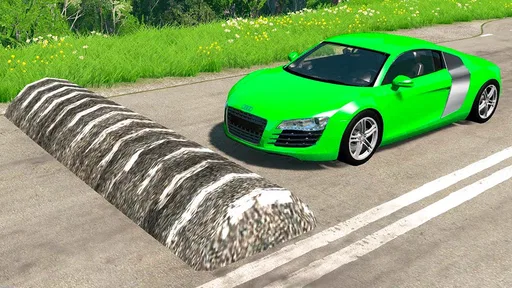

Our Review of Car games drive car parking
 Analysis by Appyee
I tried Car games drive car parking as a straightforward driving game, and my first impression was that it aims for quick, uncomplicated play rather than a deep racing simulation. It sits in the racing category, but its focus is broader than high-speed competition: parking challenges, driving practice, cars, and trucks all fit into the experience. That makes it easier to pick up when I have only a few minutes, especially on a shared phone or tablet where different people may want a simple activity without a long setup.
The game is free, has an Everyone age rating, and comes from Akarau Multiplayer online & offline io & car games. It has reached over ten million installs and holds a 4.0 average from around sixteen thousand ratings, which suggests that its accessible driving format appeals to a sizeable audience. I would not approach it expecting the detailed physics, licensed vehicles, or competitive depth of a premium console-style racer. I would approach it as a casual car game that lets me move between driving and parking ideas without demanding a large time commitment.
How it works on a shared household device
In my experience, the strongest use case is a short turn-taking session. One person can try a parking task, hand over the device, and let someone else attempt the next maneuver. That works better than a long career game when a family is sharing one screen, because nobody has to wait through an extended race or watch someone else maintain a complicated progression path for a long time.
A parent might use it as a casual driving-themed game for a child, while another household member uses it for a few minutes of relaxed play. An older player may enjoy the precision of lining up a vehicle, whereas a younger player may simply like steering a car or truck around. The variety implied by the game’s focus gives the device more than one kind of user, even though the overall experience remains simple.
The important practical point is that this is not a substitute for a family multiplayer system. I would treat it as a pass-the-device game unless the current build clearly presents a mode that suits simultaneous play. The developer name mentions multiplayer and offline play, but I would not assume that every mode works the same way or that two people can automatically race together. If coordination matters, I would check the available menu options directly before planning a group session.
That distinction prevents a common disappointment. A household looking for a shared racing competition may prefer a game built specifically around live matches, visible player accounts, and clear multiplayer invitations. This title is more comfortable when the goal is simply to drive, park, and swap turns without turning the session into an organized event.
What I would do before handing over the device
Before letting someone else play, I would open the game myself and look through the starting screens. This is less about complicated configuration and more about understanding the controls, the available driving choices, and whether the next screen leads directly into play. On a shared device, a quick preview avoids a child repeatedly asking an adult to find the right activity or accidentally changing the session while another person is waiting.
I would also decide whether the device should be used in portrait or landscape orientation, if the game offers that choice, and keep the same arrangement for everyone. Consistency matters in a driving game because a player who learns one steering position can become confused when another person rotates the screen or changes the way the device is held.
There is another useful boundary: separate casual play from any personal activity on the device. I would not hand over an unlocked phone with unrelated messages, photos, or work screens visible. The game itself may be suitable for Everyone, but the surrounding device still contains information that should remain private. A shared tablet with a dedicated play session is easier to manage than a personal phone passed around without preparation.
Because the game is free, it is easy to install for a quick trial rather than making a financial commitment. That is convenient for a household deciding whether the driving style suits different players. I would still watch the first session rather than assuming that a free download automatically means a frictionless family experience. The age rating describes the game’s intended content context, not the habits of every person using the device.
Keeping turns fair without built-in family tools
I found that simple coordination works better than trying to make the game serve as a formal family account system. Decide who starts, agree on a short turn, and let the next person take over after a completed attempt. This approach is especially useful when the game does not provide a clear household profile structure. Each player can focus on improving a maneuver rather than arguing over whose progress belongs to whom.
If several people want to play, I would avoid changing settings between every turn. Let one player finish a parking attempt, then pass the device with the same controls and view intact. This creates a small but meaningful sense of fairness: everyone faces the same layout and does not gain an advantage from quietly altering the setup.
For younger players, an adult can demonstrate one complete attempt first. I would show how to approach a space slowly, correct the vehicle’s angle, and use patience instead of forcing the steering. That turns the game into more than random button pressing. It also reduces frustration when a child expects a car to turn instantly or assumes that speed is always the best way to succeed.
For older children and adults, I would make the challenge more specific. Instead of saying “just drive,” ask the player to park with fewer corrections, use a wider approach, or complete a section without rushing. These small goals make a basic driving game feel more purposeful while staying within what the title naturally offers. They also help two players compare technique rather than simply comparing who moves fastest.
I would not promise that progress, scores, or preferences will remain neatly separated between household members. The safest approach is to regard the device as shared play space unless the game itself presents a clear way to distinguish users. That matters if one person cares about personal results and another wants to experiment freely. A shared session can be enjoyable, but it may not provide the account boundaries that a dedicated competitive game would.
Age context and trust
The Everyone rating makes the game easier to consider for a mixed-age household. Its subject is familiar and non-threatening: driving cars, handling trucks, and attempting parking tasks. I can see why an adult might choose it as a first car-themed game for a child who is interested in vehicles but is not ready for a more intense racing title.
Even so, I would introduce it with realistic expectations. An age rating does not tell me whether a child will find the controls easy, whether the pace will hold their attention, or whether they will need help interpreting a parking challenge. Younger players may enjoy the vehicles immediately but become irritated when careful positioning is required. A short supervised session is the best way to judge fit.
Trust also applies to the device itself. I would explain which parts of the screen are for driving and which actions should be left alone. If the game presents any external prompts, store-related screens, or device-level requests during use, I would handle those personally rather than asking a child to make a decision. That is a general shared-device habit, not a claim about a particular feature or policy inside the game.
For a teenager or adult, the age rating is less important than the desired depth. Someone who wants realistic road rules, detailed vehicle tuning, or a serious online ranking system may find this experience too light. Someone who wants a relaxed driving break may appreciate that it does not require the same commitment as a large racing game. The right choice depends more on the player’s expectations than on the label alone.
Where it fits among driving alternatives
Compared with a pure arcade racer, this game’s parking and general driving emphasis gives me more reason to slow down and position the vehicle carefully. A traditional racer rewards speed, overtaking, and repeated competition. Here, the appeal is more about handling a vehicle through a task. That makes it a better fit for someone who enjoys the act of driving but does not always want a race.
Compared with a serious driving simulator, it is easier to approach casually. I would not choose it for a detailed lesson in real-world vehicle behavior, because the store summary presents it as a collection of car and truck driving ideas rather than a strict training tool. The advantage is accessibility; the trade-off is that players seeking realism may notice the simplified feel.
Compared with a dedicated multiplayer racer, it is more suitable for local turn-taking than for building an organized competitive community. The developer’s name references both online and offline play, but the practical question is which options are visible and useful on the device in front of me. If my priority is inviting friends into a structured match, I would choose a game whose multiplayer flow is its central identity. If my priority is passing a phone around for short driving attempts, this title makes more sense.
Compared with a large open-world driving game, it asks for less attention and probably less patience from a new player. I can get to the basic idea without first learning a broad map, a long upgrade tree, or a complicated collection of vehicles. That simplicity is a benefit in a household setting, although it may also mean that experienced players run out of fresh goals sooner.
Small techniques that improve the experience
My first practical tip is to approach parking spaces more slowly than feels necessary. In a casual driving game, the instinct is often to move quickly and correct the vehicle at the last moment. That usually creates a wider angle and more back-and-forth movement. A slower entry gives me time to judge the vehicle’s position and makes the task easier for a second player to understand when taking a turn.
My second tip is to use the whole approach rather than turning only at the final moment. I would line up the vehicle before entering a narrow space, even if that means driving past the ideal point and repositioning. This is a useful lesson for children because it shows that successful parking is mostly preparation. It also gives adults a more satisfying technical challenge than simply tapping through an open area.
A third insight is to use the game as a coordination exercise rather than only a score chase. One player can describe the next move while another drives, then switch roles. The person giving directions has to think about angles and distance, while the driver practices responding to small corrections. This works particularly well on a shared screen, provided both people stay patient and avoid giving too many instructions at once.
I would also keep an eye on how different vehicle types change the feel of a task. A truck-themed challenge naturally invites wider turns and more careful positioning than a small car. Instead of treating every vehicle as interchangeable, I would encourage players to adjust their approach. That simple change adds variety without requiring advanced settings or a separate game mode.
Finally, I would stop a session when mistakes become repetitive rather than forcing a player to continue. Parking games can become irritating when someone is no longer learning from each attempt. A short break, a turn for another player, or a return to a simpler driving task often works better than repeated failure. This is especially important with children, who may interpret a difficult maneuver as a sign that they are bad at the game rather than that the approach needs changing.
Version, device fit, and everyday practicality
The current version is 56, and the game supports devices running Android 5.1 or later. That gives it a broad compatibility range compared with titles that require a recent operating system. Still, compatibility alone does not guarantee identical performance on every phone or tablet. Older hardware may feel less comfortable for steering, and a small screen can make precise parking harder than a larger display.
For a household, I would test the game on the device that will actually be shared, not just on the newest phone available. Screen size, grip, battery condition, and responsiveness all affect a driving game. A tablet can make vehicle positioning easier to see, while a phone is more convenient for a quick personal session. The best choice depends on whether the priority is portability or shared visibility.
The game’s free price lowers the barrier to trying it, which is useful when several people have different tastes. I would install it, let each likely player complete a short session, and then decide whether it deserves a regular place on the device. That is more reliable than judging it from the car theme alone, since some players will enjoy parking precision while others will quickly want a faster, more competitive experience.
Its popularity also makes it easier to regard as an established casual option rather than an obscure experiment. The combination of over ten million installs and a 4.0 average indicates broad reach, but I would still treat the rating as a starting point rather than a guarantee. A player who wants relaxed vehicle handling may be satisfied, while a simulator fan may reasonably expect more depth and leave disappointed.
Who should choose it, and who should skip it
I would recommend it to someone who wants a free car game for short sessions, especially if parking and general driving sound more appealing than constant racing. It is a sensible candidate for a shared household device because the concept is immediately understandable and can support simple turn-taking. It also suits players who prefer learning through repeated attempts rather than managing a large progression system.
I would be more cautious about recommending it to someone who wants a fully organized online competition, detailed simulation, or a long-term personal account with carefully separated progress. The game may offer more than a basic offline driving session, but I would verify the available play options on the device before choosing it for that purpose. A specialist racing title will usually be a better fit when online competition or realism is the main reason for downloading.
I would also skip it if the player dislikes parking-style precision. The slower, corrective nature of vehicle positioning is central to the appeal, and it can feel repetitive to someone who only wants high-speed racing. Likewise, a player seeking a large world to explore may find the focused driving tasks less rewarding than an open-world alternative.
My household verdict
After using it, I see Car games drive car parking as a practical casual choice rather than a definitive racing experience. Its value comes from being approachable: I can use it for a quick driving break, introduce it to a younger player, or pass the device between household members for short attempts. Cars, trucks, and parking give the game enough variety to support different moods, while the free price makes experimentation easy.
The best way to enjoy it is to set clear expectations. Keep turns short, preview the controls, supervise younger users at the start, and do not assume that a shared device automatically creates separate player identities. Those boundaries make the experience smoother and avoid expecting it to provide family-account organization that may not be central to its design.
My final recommendation is positive for casual players who like vehicle handling and simple parking challenges. I would choose a more specialized alternative for serious simulation, deep progression, or structured multiplayer competition. For a household looking for an accessible game that can be picked up, understood, and handed to the next person, this one earns a reasonable place on the shortlist.
Verdict
Strengths of Car games drive car parking
- Simple controls make driving easy for beginners.
- Multiple parking challenges keep short sessions engaging.
- Different vehicles add variety to the gameplay.
- Works well for casual play without a constant internet connection.
- Gradually harder levels provide a satisfying challenge.
Limitations of Car games drive car parking
- Some levels may feel repetitive after extended play.
- Ads can interrupt gameplay between parking attempts.
- Vehicle handling may feel less realistic than expected.
- Limited customization reduces long-term personalization.
- Certain stages require precise movements that can feel frustrating.
Similar Picks in This Category
View All
Hill Climb Racing
Fingersoft4.3

Dr. Driving
SUD Inc.4.2

Traffic Rider
skgames4.5

Asphalt 8 - Car Racing Game
Gameloft SE4.6

Race Master 3D: Car Racing
Beresnev Games4.6

Extreme Car Driving Simulator
AxesInMotion Racing4.3
Frequently Asked Questions
What is Car Games Drive Car Parking?
Car Games Drive Car Parking is a driving and parking simulator focused on maneuvering vehicles through challenging parking areas. After testing its main modes, the gameplay feels centered on steering accuracy, braking, reversing, and completing parking tasks without hitting obstacles. It is designed for casual players who enjoy short driving challenges rather than a full open-world racing experience.
How do you play Car Games Drive Car Parking?
The basic objective is to drive the selected car through a course and park it inside the marked space. You normally control acceleration, braking, steering, and sometimes camera views or reverse movement. Each level requires patience and careful positioning, because collisions, touching barriers, or parking outside the target area may cause a failure or reduce your score.
Does Car Games Drive Car Parking work offline?
The core parking challenges can generally be played without a constant internet connection, which makes the game convenient for travel or situations with limited data access. However, some features may depend on connectivity, including advertisements, optional rewards, updates, or other online services. It is best to launch the game once while connected before relying on offline play.
Is Car Games Drive Car Parking suitable for children and beginners?
The game is relatively easy for beginners to understand because its controls and objectives are straightforward. Children may also enjoy the simple parking challenges, although parents should check the recommended age rating, advertising content, and in-app purchase settings before installation. Later levels can demand more precision, so younger players may need time to become comfortable with steering and reversing.
Are there advertisements or in-app purchases in Car Games Drive Car Parking?
Depending on the version and platform, Car Games Drive Car Parking may include advertisements, particularly between levels or after completing a challenge. Some editions can also offer optional purchases for removing ads, unlocking vehicles, or obtaining other bonuses. Before downloading, review the store listing and permissions carefully, and use device purchase restrictions if children will be playing.
Play our best games!


